We earn a commission if you buy through our links, at no extra cost to you. We rank by cost and how long things last, not by commission. Details.
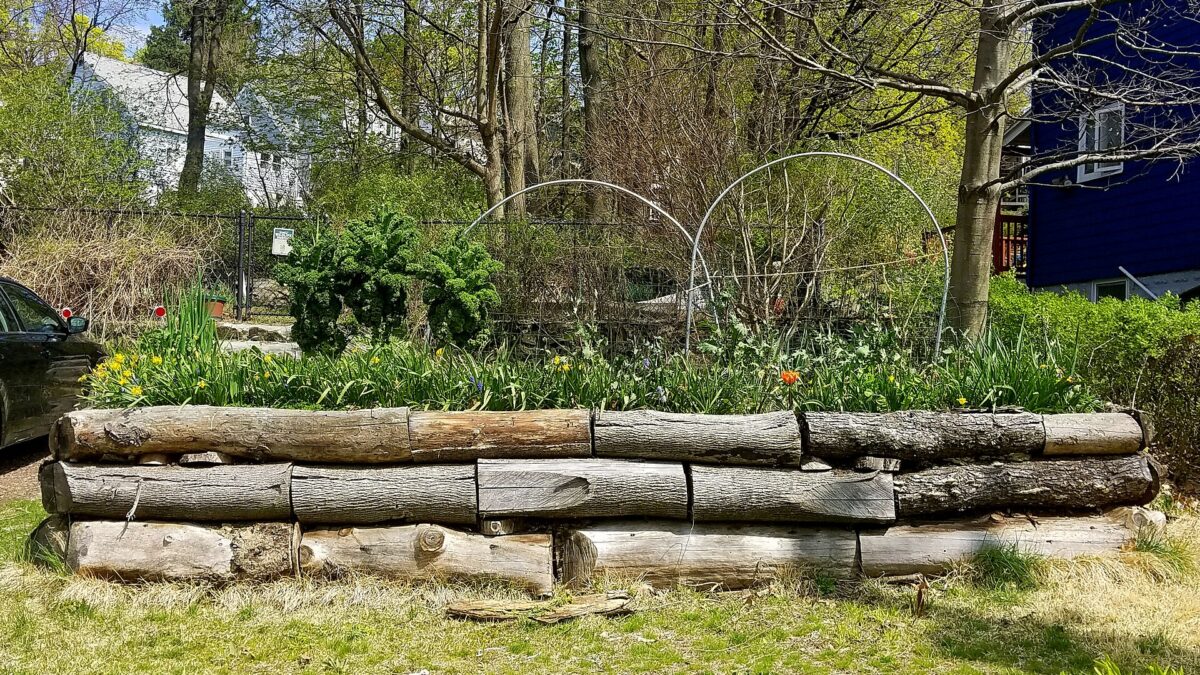
You can fill a 4×8×1-foot raised bed for roughly $35–$90 instead of $160–$250 by putting free logs, branches and leaves in the bottom half and buying soil only for the top. This layered method borrows from hügelkultur, an old technique of burying wood to build soil. The wood soaks up water like a sponge and slowly feeds the bed as it breaks down.
The receipt: one 4×8 bed, 12 inches deep
| Layer | Amount | Typical cost |
|---|---|---|
| Cardboard (bottom) | 4–6 boxes | $0 |
| Logs and thick branches | ~8 cu ft | $0 |
| Twigs, leaves, grass clippings | ~6 cu ft | $0 |
| Compost (free municipal or bagged) | ~4 cu ft | $0–$30 |
| Raised bed soil or topsoil mix, top layer | ~14 cu ft | $35–$60 |
| Total | 32 cu ft | $35–$90 |
Typical US prices in late 2026, bagged. Bulk soil can be cheaper for several beds. Check your town for free leaf compost. How we price.
Why it works
Most vegetable roots do their work in the top 8 to 12 inches. Everything below that is space you’re paying to fill. Wood, leaves and other organic matter fill that space for free. As fungi and microbes break the wood down, it holds water, adds organic matter and keeps feeding the soil for years. Many gardeners find they water less, especially in the second season.
The layers, bottom to top
- Cardboard. Lay plain brown cardboard over the grass inside the frame, overlapping 6 inches. Remove all tape. Soak it. See sheet mulching with cardboard.
- Logs and big branches. Fill about a quarter of the depth. Older, partly rotted wood is best because it holds water right away. Pack gaps tightly.
- Small branches and twigs. Fill the gaps between logs so soil doesn’t fall into big air pockets.
- Greens. Grass clippings, garden trimmings and kitchen scraps (no meat or dairy) add nitrogen that helps the wood break down.
- Browns. Shredded leaves or straw on top of the greens. Water every layer as you go.
- Compost. A few inches of finished compost to start the transition.
- Soil. At least 6 inches of good raised bed mix on top, where roots and seeds will live.
Run your exact numbers in the raised bed soil calculator with the filler option ticked.
Which wood to use (and avoid)
- Rotting hardwood logs (oak, maple, birch)
- Fruit tree prunings
- Poplar, willow, alder
- Untreated scrap lumber
- Black walnut (can inhibit many plants)
- Pressure-treated or painted wood
- Fresh cedar or redwood in large amounts (slow to break down)
- Wood with signs of disease
Common mistakes
- Not enough soil on top. Seeds and small roots need at least 6 inches of real soil. Don’t plant straight into woody layers.
- Big air pockets. Fill gaps with small branches and leaves, and water each layer so it settles.
- Too much fresh wood with no greens. Wood breakdown pulls nitrogen from the surrounding soil at first. Greens and compost balance it.
- Surprise sinking. The bed will settle, sometimes several inches, in the first year. Top up with compost each spring.
Where to get free filler
- Tree services often give away logs and wood chips to save on dump fees.
- Neighbors’ leaf bags in fall — ask first.
- Storm cleanup branches after windy weather.
- Town compost programs that offer free leaf compost to residents.
The dirt cheap rule
Pay for soil only where roots live. Fill everything below with what your yard and neighbors would otherwise throw away.
Building the frame too? Our cinder block raised bed receipt pairs well with this fill method, and raised bed costs by material compares the alternatives.
FAQ
What can I put in the bottom of a raised bed to save money?
Logs, branches, twigs, leaves, grass clippings, straw and cardboard. Avoid treated wood, black walnut and plastic.
Will a hugelkultur raised bed sink?
Yes, it settles as the organic matter breaks down. Expect to add compost on top each spring for the first few years.
Can I plant right away?
Yes, as long as there are at least 6 inches of soil on top. Fertilize a little in the first season while the wood starts breaking down.
Does rotting wood attract termites?
Wood in contact with soil can attract insects. Keep beds away from house foundations and wooden structures.