We earn a commission if you buy through our links, at no extra cost to you. We rank by cost and how long things last, not by commission. Details.
Most of these raised beds cost between $0 and $60, because the frame comes from scrap: old lumber, pallets, logs, stone, bricks, tubs and even straw bales. The frame is the easy part to get free. Soil is where the money goes, so every idea below also notes how to fill it cheaply.
Each idea lists a typical cost range for the frame only (typical US prices in late 2026; check locally) and a difficulty rating. See how we price.
The scrap frame cheat sheet
| Material | Typical frame cost | Lifespan | Food-safe? |
|---|---|---|---|
| Free pallets (HT stamp) | $0 | 2–4 yrs | Yes, if HT or KD |
| Logs and branches | $0 | 3–6 yrs | Yes (skip walnut) |
| Salvaged bricks / stone | $0–$20 | 20+ yrs | Yes |
| Used concrete blocks | $0–$40 | 20+ yrs | Yes |
| Scrap untreated lumber | $0–$30 | 3–5 yrs | Yes |
| Old stock tank / tub | $0–$60 | 10+ yrs | Yes, if never held chemicals |
Frame only. Fill the bottom half with free logs, leaves and cardboard to cut the soil bill. How we price.
Free and almost-free wood frames
1. Pallet board bed — $0
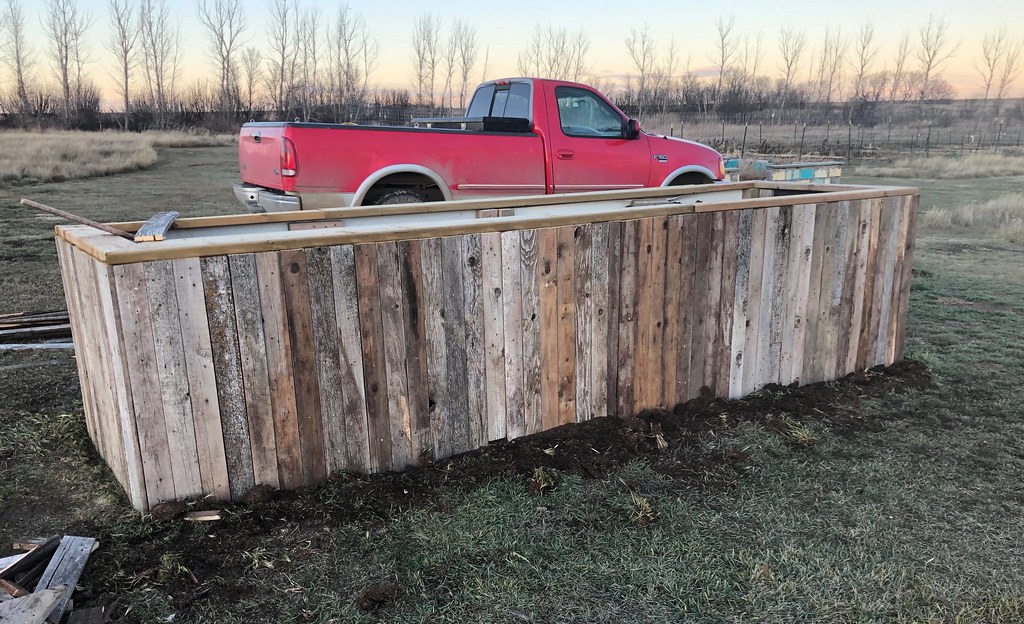
Pry pallets apart and screw the boards to corner stakes. Only use pallets stamped HT (heat treated) or KD. Skip MB-stamped or unmarked pallets for food. Full method in our $0 pallet planter build.
2. Whole-pallet box — $0
Stand four pallets on edge and lash the corners with wire. It’s ugly but deep, and it works as a compost-filled potato bed for a season.
3. Scrap 2x lumber frame — $0–$30
Leftover 2×6 or 2×8 boards from a deck or remodel make a classic bed. Untreated wood rots in a few years; line the inside with cardboard to slow it down.
4. Fence picket bed — $10–$30
Old cedar fence pickets are thin but rot-resistant. Double them up or screw them to 2×2 corner posts for strength.
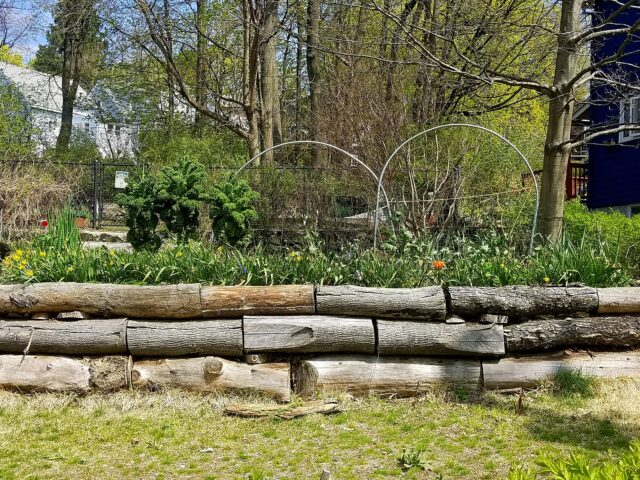
5. Log border bed — $0
Lay straight logs in a rectangle and pin them with rebar or stakes. Logs hold moisture and break down slowly into the soil. Avoid black walnut, which can harm many vegetables.
6. Woven willow or branch wattle — $0
Drive stakes every foot and weave flexible branches between them. It takes an afternoon and looks like something from a cottage garden.
Stone, brick and block
7. Dry-stacked fieldstone — $0
Rocks dug up from your own yard make a permanent low wall. Stack the flattest faces outward and lean the wall slightly inward.
8. Salvaged brick bed — $0–$20
Two or three courses of old brick laid dry make a neat edge. Ask on local marketplaces; people pay to haul brick away.
9. Used concrete blocks — $0–$40
Blocks are often given away after demolitions. The cores become extra planting pockets. Our 4×8 cinder block receipt shows the full cost when buying new.
10. Broken concrete (“urbanite”) wall — $0
Slabs from a removed patio or sidewalk stack like flagstone. Wear gloves and eye protection when handling edges.
11. Bottle-edged bed — $0
Bury glass bottles neck-down in a tight row. It’s a low edge rather than a tall wall, best for flower beds.
Containers that become beds
12. Old stock tank — $0–$60
A rusty or leaking galvanized tank sold cheaply still makes a deep bed. Drill drainage holes in the bottom.
13. Bathtub bed — $0
Old tubs already have a drain. Add gravel over the drain, then soil. Check that it never held harsh chemicals.
14. Wheelbarrow bed — $0
A leaky wheelbarrow becomes a movable salad bed you can roll into the sun.
15. Dresser drawer beds — $0
Solid-wood drawers make small, shallow beds for herbs and lettuce. Skip particleboard, which falls apart when wet.
16. Tire stack bed — $0
Many people grow flowers in stacked tires. For edibles, opinions vary on chemicals from old tires, so we suggest flowers only.
17. Plastic tote bed — $0–$10
Cracked-lid storage totes are fine as long as the base holds. Drill holes and fill with potting mix for greens.
No-frame and soil-built beds
18. Straw bale bed — $5–$10 per bale
Condition a straw bale with water and fertilizer for about two weeks, then plant directly into it. It composts in place by season’s end.
19. Hugelkultur mound — $0
Pile logs and branches, cover with leaves and soil, and plant on top. Step-by-step in how to fill a raised bed cheaply.
20. Lasagna bed with no walls — $0
Layer cardboard, greens and browns right on the lawn. Our cardboard sheet mulching guide covers the layers.
21. Mounded row bed — $0
Rake soil from the paths onto the beds to raise them 6 inches. No frame, no cost, and it drains better than flat ground.
Mixed-material and clever frames
22. Corrugated roofing panels — $0–$40
Leftover metal roofing screwed to wooden corner posts makes a modern-looking bed. Cover the sharp top edge with split garden hose.
23. Old door or headboard sides — $0
Solid wood doors make long sides for a 7-foot bed. Seal painted ones or keep them for flower beds if the paint is old.
24. Gabion wire basket bed — $20–$60
Fill a wire basket frame with rubble from your yard. It drains perfectly and lasts for years.
25. Keyhole compost bed — $0–$20
Build a circle of stone or block with a compost basket in the middle. Scraps feed the bed from the center.
Scrap safety rules
- No pressure-treated wood of unknown age, railroad ties or painted wood with old paint around edibles.
- Pallets: HT or KD stamp only. Never MB or unmarked for food.
- Containers: never use anything that held fuel, pesticides or chemicals.
Comparing new materials instead? See how much a raised bed costs, or get your soil numbers from the raised bed soil calculator.
FAQ
What is the cheapest way to make a raised bed?
Use free materials for the frame — pallets, logs or stone — and fill the bottom half with logs, leaves and cardboard so you buy less soil.
Is scrap wood safe for vegetables?
Untreated scrap wood is fine. Avoid old pressure-treated lumber, railroad ties and wood with old paint near edibles.
How long do scrap wood beds last?
Usually 3 to 5 years for untreated softwood. Cedar and thicker boards last longer.
Do raised beds need a bottom?
No. An open bottom over cardboard drains well and lets roots reach the soil below.