We earn a commission if you buy through our links, at no extra cost to you. We rank by cost and how long things last, not by commission. Details.
A two-bucket self-watering planter costs $0–$10 if you can get free food-grade buckets and have some potting mix, and about $18 if you buy everything new. It can hold enough water to go a few days between fills in summer. It’s the cheapest way to grow a tomato or pepper on a patio without daily watering. One bucket holds the soil, the other holds the water, and a cup of soil wicks moisture up to the roots.
The receipt: one 5-gallon planter
| Item | Qty | Typical cost |
|---|---|---|
| Food-grade 5-gallon buckets | 2 | $0 (bakeries, delis) or $4–$8 new |
| Plastic cup or small net pot (wick) | 1 | $0 |
| PVC pipe or bottle for fill tube, ~1 in. × 18 in. | 1 | $0–$2 |
| Potting mix | ~0.7 cu ft | $0 leftover or $5–$8 for a small bag |
| Total | $0–$10 with free buckets · up to ~$18 all new |
Typical US prices in late 2026. Many bakeries and grocery deli counters give away frosting and pickle buckets — always ask first. How we price.
How it works
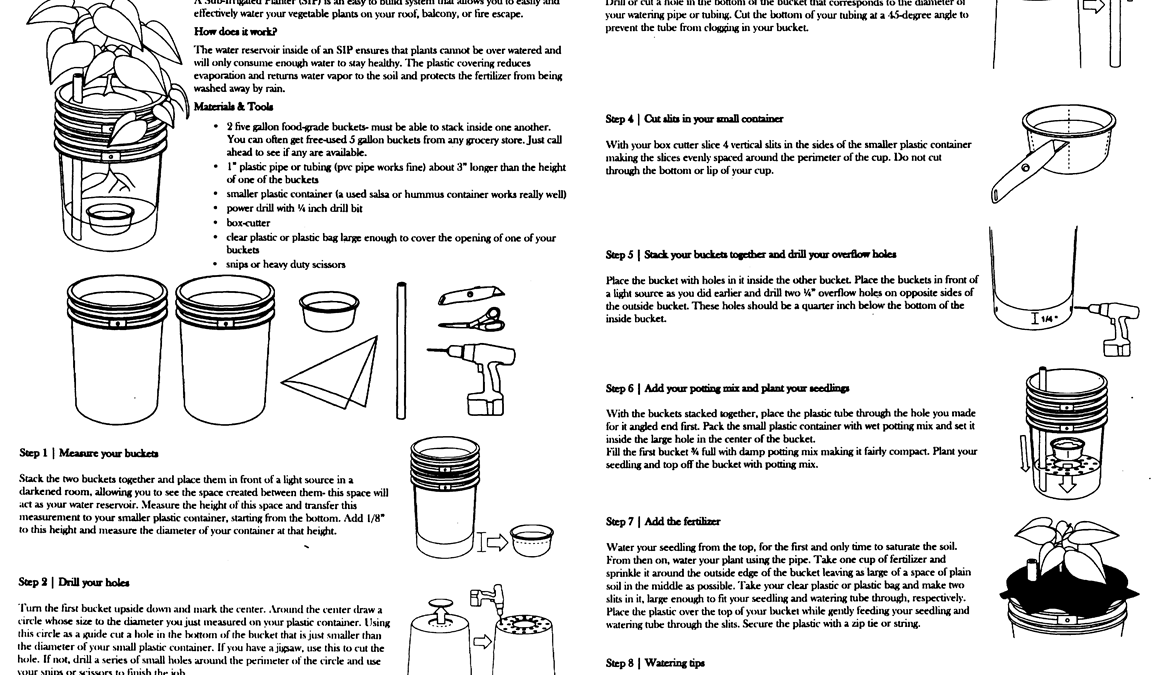
The inner bucket sits inside the outer one, leaving a gap of a few inches at the bottom for water. A cup of soil pokes down through the inner bucket’s base into the water. Capillary action pulls moisture up from the reservoir into the soil, so roots always have water available without being soggy. An overflow hole keeps rain from drowning the plant.
Tools
- Drill with a 1/4-inch bit and a hole saw sized to your wick cup and fill tube
- Utility knife
- Marker
Step by step
- Get food-grade buckets. Look for HDPE (recycling #2) buckets that held food. Wash them well. Never use buckets that held paint, chemicals or solvents.
- Cut the wick hole. In the center of the inner bucket’s base, cut a hole just big enough to fit your cup snugly. Poke many small holes in the cup’s sides and bottom.
- Drill drainage holes. Drill a ring of 1/4-inch holes in the inner bucket’s base around the wick hole so water can move up and air can reach roots.
- Cut the fill tube hole. Near the edge of the inner base, cut a hole for the fill tube. Cut the bottom end of the tube at an angle so water flows out freely.
- Drill the overflow hole. On the outer bucket, drill one hole in the side just below where the inner bucket’s base will sit. This is the most important step: it stops the reservoir from flooding the soil.
- Assemble. Set the inner bucket in the outer one. Push the cup through the wick hole and the tube through its hole.
- Fill with damp mix. Pack the wick cup firmly with moist potting mix first, then fill the bucket. Water from the top the first time so the soil settles and connects with the wick.
- Fill the reservoir through the tube until water runs out of the overflow hole.
What to grow in a bucket
- Patio or determinate tomatoes — one plant per bucket, with a small cage.
- Peppers and eggplant — one plant per bucket.
- Herbs — basil, parsley or a mix.
- Lettuce and chard — several plants; they love the steady moisture.
- Potatoes — a few seed pieces, hilled with extra mix as they grow.
- Very cheap
- Fewer waterings in summer
- Movable and stackable in winter
- Not pretty unless painted or wrapped
- White buckets let light in; paint or wrap them
- 5 gallons is small for large indeterminate tomatoes
Don’t skip
- The overflow hole. Without it, one storm can rot the roots.
- Covering the fill tube so mosquitoes can’t breed in standing water.
- Feeding: container plants need fertilizer every few weeks.
Want a free planter for herbs instead? Try the $0 pallet planter. Planning a full garden budget? See what it costs to start a garden.
FAQ
Are 5-gallon buckets safe for growing food?
Food-grade HDPE buckets (recycling #2) are commonly used. Avoid buckets that held paint, chemicals or unknown contents.
How often do I fill the reservoir?
In hot weather with a large tomato, it may be every day or two. Smaller plants and cooler weather stretch it longer.
Why use potting mix instead of garden soil?
Garden soil compacts in buckets and wicks poorly. Light potting mix moves water up evenly.
Can I use one bucket instead of two?
Yes, with a plastic platform or inverted container inside to create a reservoir, but the two-bucket version is the simplest.